
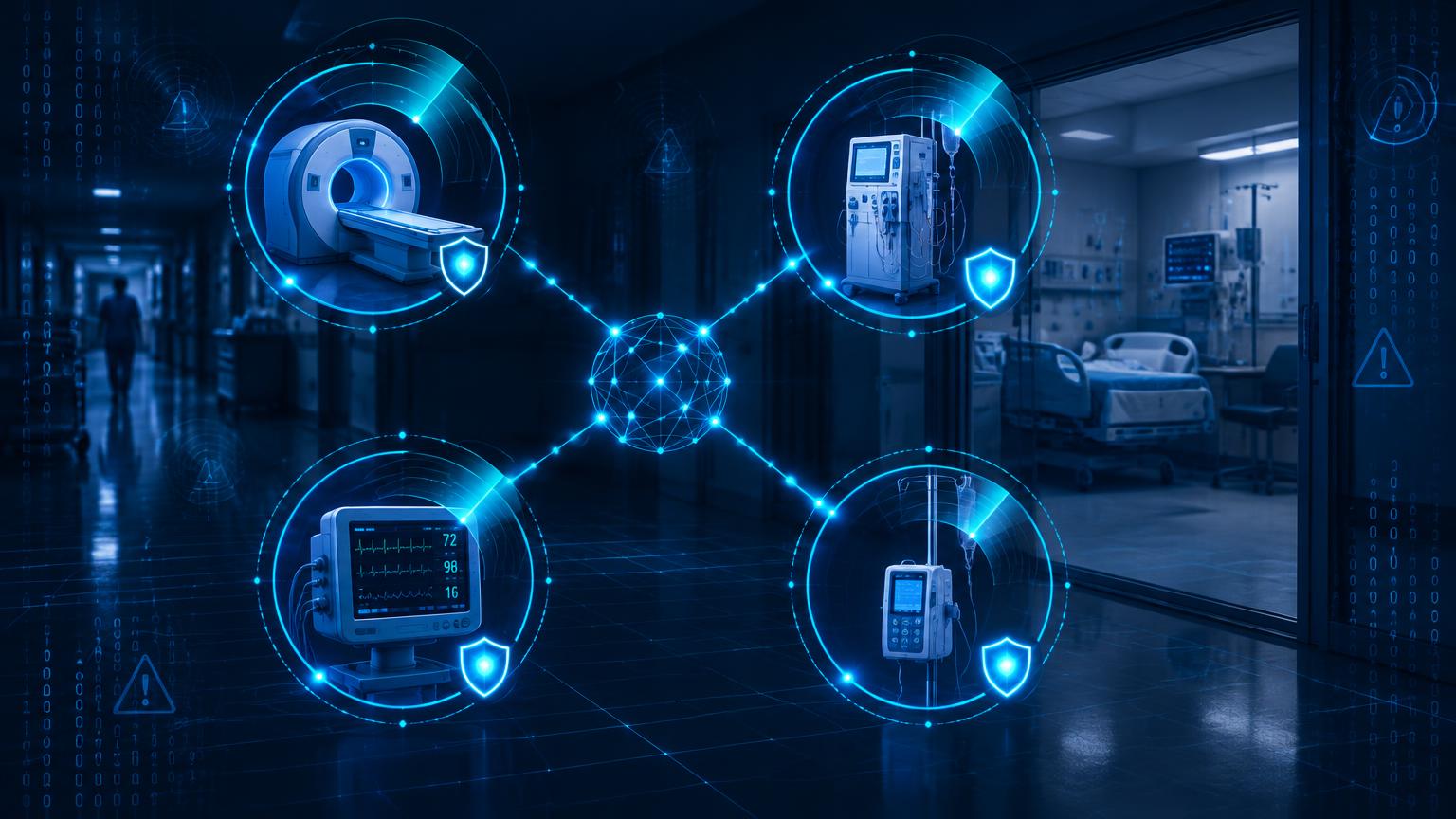
Hospitals are prime ransomware targets because downtime threatens patient safety. Honeypots give hospital security teams high-fidelity alerts, early warning, and real attacker tradecraft, with zero risk to PHI.
A hospital network is one of the hardest environments in any industry to defend. It blends corporate IT, electronic health record systems, biomedical devices, building controls, and vendor remote access into a network that can never be fully taken offline for maintenance. When ransomware lands in a hospital, the impact is not a lost spreadsheet. It is ambulances diverted, surgeries delayed, and clinicians reverting to paper.
Attackers know this. Ransomware groups deliberately target healthcare because downtime creates life-safety pressure, and life-safety pressure shortens negotiations. That makes deception-based threat intelligence, in the form of clinical honeypots, one of the highest-value signals a hospital security team can deploy.
Why hospitals are attractive targets
Healthcare combines several conditions attackers look for:
- Uptime requirements that discourage patching. Clinical systems run continuously, so vulnerable devices stay exposed far longer than in other industries.
- Legacy and specialized devices. Imaging equipment, infusion systems, and monitoring platforms often run old operating systems that cannot be upgraded on the vendor's timeline.
- Flat networks. Clinical, administrative, and building-management traffic frequently share segments, which lets one foothold spread quickly.
- High-value data. Medical records command premium prices, and the regulatory cost of a breach is severe.
- Third-party access. Biomedical vendors, service contractors, and remote support tunnels create many external entry paths.
Most hospital security teams already know this list. The hard part is visibility: knowing when someone is actually probing those weak points, and what they do once inside.
Why traditional alerts fall short in clinical environments
A hospital SOC is flooded with alerts from antivirus, firewalls, and identity systems. Most are low-value noise. False positives are expensive because every escalated alert competes with clinical operations. At the same time, the alerts that matter most, like reconnaissance against medical devices or unauthorized access attempts on clinical servers, often look unremarkable on their own.
Deception changes the math. A well-placed honeypot has no legitimate users. Any interaction with it is, by definition, suspicious. That means the alert is high-fidelity, not a statistic to be triaged away.
What a clinical honeypot gives a hospital security team
A honeypot fleet purpose-built for healthcare provides several things no other control can:
- Early warning. Attackers spend time inside a network before detonating ransomware. Decoys that look like dialysis units, imaging systems, cardiac monitors, or medication dispensing stations give you a tripwire along the paths an intruder would naturally explore.
- Real protocol interaction. Decoys that speak real medical protocols capture meaningful attacker behavior, not just port scans. You learn what commands were attempted, which credentials were used, and what the intruder was looking for.
- Zero patient risk. A simulated clinical device holds no real PHI. It produces the intelligence value of a compromised system with none of the regulatory exposure.
- Attacker tradecraft, not just indicators. Session logs from a honeypot show tools, timing, and lateral movement patterns. That is the raw material for threat intelligence, detection engineering, and incident response.
- Evidence for governance. When you can show regulators and leadership exactly what attackers attempted against your clinical environment, security investment conversations change.
From honeypot hits to intelligence
A honeypot only pays off when its signals feed a process. Treat every interaction as an event that answers your intelligence requirements:
- Observed: What touched the decoy, when, from where, using what credentials or tools?
- Assessed: Is this opportunistic scanning, or behavior consistent with a known ransomware pre-positioning pattern?
- Unknown: What has not been verified, and what should be hunted for next?
- Next actions: Which firewall rules, identity reviews, or vendor notifications are justified by the evidence?
Over time, honeypot telemetry tells you which adversaries target hospitals like yours, which credentials are being reused, and which attack paths keep appearing. That is exactly the intelligence a hospital security program needs to prioritize patching, segmentation, and vendor access reviews.
Getting started without disrupting care
You do not need a large team to run deception in a hospital. Start small:
- Place a handful of simulated clinical devices on segments where real biomedical equipment lives.
- Add decoys near remote access entry points and on the path between corporate IT and clinical networks.
- Alert on any interaction, and route it to a defined triage owner.
- Review the captured tradecraft monthly and fold findings into your detection rules and intelligence requirements.
Because decoys are passive until touched, they add signal without adding load to clinical systems or requiring changes to patient-facing devices.
The ThreatSpire takeaway
Hospitals cannot rely on attackers ignoring the clinical network any longer. Ransomware crews treat healthcare as a preferred target, and the gap between an early tripwire and a diverted ambulance is measured in hours.
Honeypots are one of the few controls that deliver high-fidelity detection, real attacker intelligence, and zero PHI risk at the same time. For hospitals, that combination is not a novelty. It is quickly becoming table stakes.
ThreatSpire's Hospital Honeypot runs eight simulated clinical devices, including dialysis, MRI, cardiac monitoring, and medication dispensing systems, speaking real medical protocols to catch attackers before they reach a real patient. Zero real PHI is ever involved. It is available to ThreatSpire customers today.